Your Roux Was Fine, and Then Ninety Seconds Later It Wasn’t
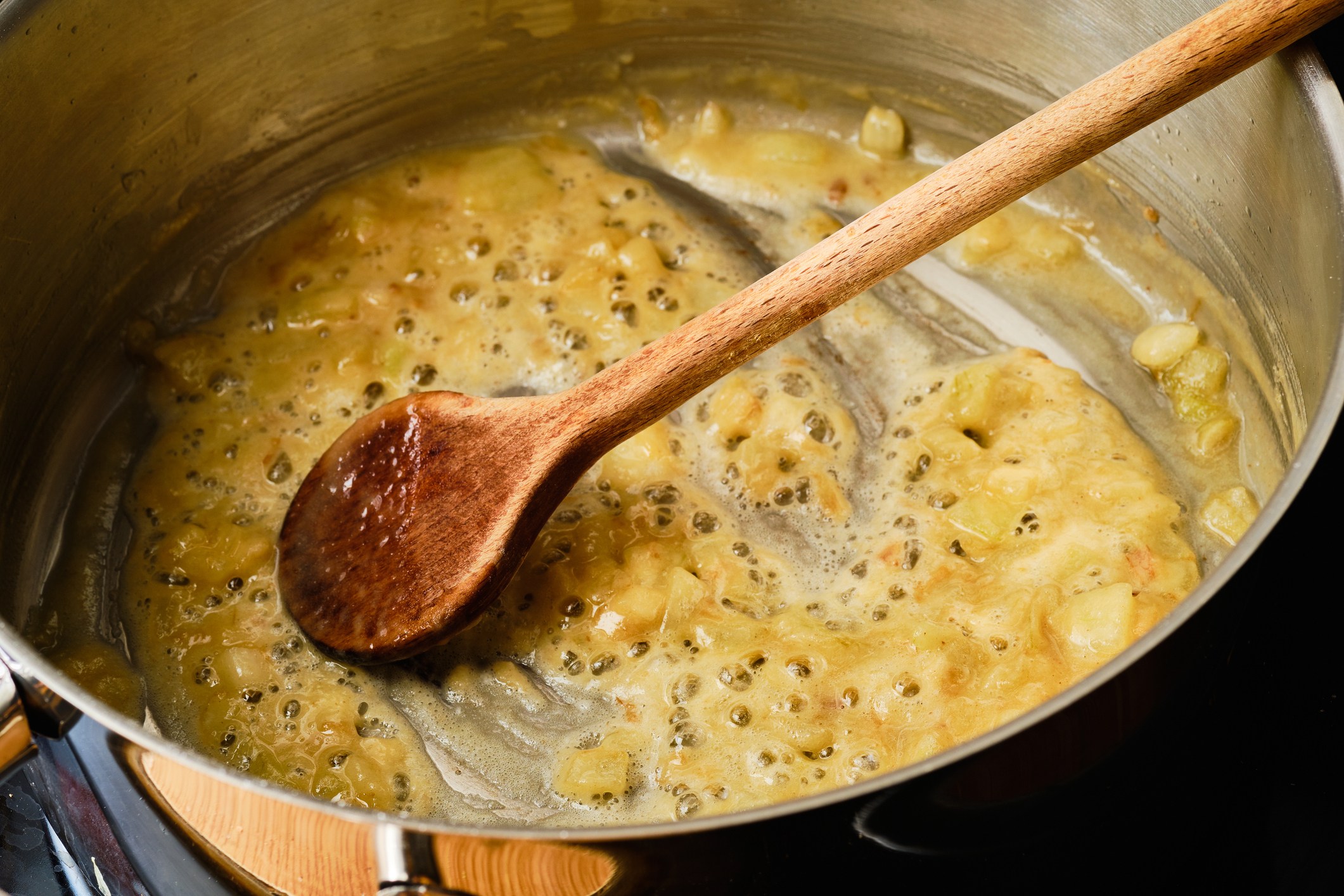
Flour and fat, equal parts, stirred over heat. The whole ingredient list for a roux fits in that sentence, and it is still the step where home gumbo most often goes wrong.
Recipes tell you to cook it to the color of milk chocolate. They do not tell you that the window between peanut butter and burnt is about as long as it takes to answer the door. They say nothing about what the kitchen smells like a moment before it is too late, either, and that smell is the actual instruction. Visitors who come to our French Quarter kitchen on St. Louis Street usually arrive having made gumbo at home at least once. The roux is why they came.
Color is time, and time is attention
A roux darkens on a curve. Early on it is slow and forgiving. Late on it is neither, and that is where people lose it, because the pan has been undemanding for so long that they step away to do something reasonable.
Louisiana cooks talk about blond, peanut butter, copper and chocolate roux as though they were separate preparations, and in practice they are. A lighter roux thickens more and tastes mild. A darker roux thickens less and carries the toasted, almost bitter depth that separates a gumbo from a thick soup. You trade body for flavor as you go.
Heat level decides how much room for error you get. Lower heat, longer stir, wider margin. Chefs here will tell you to take the slower road the first several times and only then start pushing it.
The three ways it fails at home
- Walking away: thirty seconds unattended near the end is enough. Black flecks appear in the fat, and once they do there is no rescue, because the bitterness goes right through the finished pot.
- The wrong pan: a thin pan has hot spots and a roux finds every one of them. Heavy-bottomed cast iron or a thick stainless pot spreads the heat and gives you a far more honest read on the color.
- Cold stock into hot roux: dumping cold liquid into a hot roux seizes it. Warm the stock, add it gradually, and keep whisking the whole time.
→ hands-on cooking classes where you make the roux yourself
Watching it done once is worth a dozen attempts
Our demonstration class exists for exactly this. You sit at the table, the chef cooks in front of you, and the roux happens at its own speed instead of the speed a recipe implies. You see the color you are aiming at in real light, in a real pan, and you hear what the chef is listening for.
People also arrive wanting to know which gumbo they will see. Both, across our class list: a chicken and andouille gumbo, and a seafood and okra gumbo on the hands-on side, alongside crawfish etouffee, shrimp creole, yam-crab bisque and jambalaya. Mention an allergy when you book and the front desk will steer you to the class that suits. Every demonstration sends you home with recipe cards for all of it.
→ demonstration classes, where the chef cooks and you watch
Gumbo is written into Louisiana law
Louisiana wrote it down. R.S. 49:170.12 runs to three sentences, and the first two are there shall be an official state cuisine, and the official state cuisine shall be gumbo. The third authorizes its use on state documents and insignia.
What the law does not settle is whose gumbo. Creole and Cajun kitchens argue about tomatoes, about okra versus filé, about whether seafood belongs in the same pot as poultry. That argument is the point, and it is most of the fun of a class.
→ the full list of classes and formats
Winter is when this city actually cooks it
Gumbo is cold-weather food, and New Orleans cooks far more of it between December and Carnival than in August. If you are here over the holidays, a cooking class is the indoor afternoon that survives rain, and you leave with a technique instead of a souvenir.
The Lab class is the lighter version — one dish, start to finish, an apron included. Hands-on puts you at a cooktop with a chef over your shoulder and a full meal at the end of it. Either way, you will have made a roux with someone watching. Nobody learns it any other way.
Frequently Asked Questions
Q: Can you make gumbo without making a roux?
A: You can make something good without one, and okra or filé will thicken the pot. It will not taste like a dark-roux gumbo, because the flavor in that version comes from the toasted flour itself.
Q: How long does a dark roux take?
A: Longer than most recipes suggest, especially at the low heat we recommend for a first attempt. Plan on standing at the stove for the whole of it.
Q: Is gumbo spicy?
A: Cajun does not mean hot. Seasoning here is built in layers and the heat stays modest, which surprises people in class more than anything else on the stove.
Come Make One in the French Quarter
Book a class and make the roux under supervision. Your second attempt at home will be the one you are proud of.
New Orleans School of Cooking, French Quarter — 524 St. Louis Street, New Orleans, LA 70130