What to Eat in New Orleans in Summer — and How to Take the Flavors Home
Quick Takeaways
- Summer is peak Gulf seafood season in New Orleans, featuring shrimp, crab, and crawfish in dishes like shrimp Creole, crawfish étouffée, and corn and crab bisque.
- Classic dishes to try include gumbo, jambalaya, étouffée, red beans and rice, bananas Foster, and a snowball to beat the heat.
- The New Orleans School of Cooking, at 524 St. Louis Street since 1980, offers hands-on classes (ages 18+, capped at 10 guests), all-ages demonstrations, and roughly 90-minute single-dish lab classes.
- Hands-on classes run three hours daily at 10:00 a.m. and 6:00 p.m. and send you home with recipe cards and an apron.
- An air-conditioned cooking class doubles as a comfortable midday escape from New Orleans summer heat.
Summer in New Orleans is hot, humid, and gloriously alive with flavor. While the afternoon sun pushes locals toward shaded courtyards and cold Abita beer, the city’s kitchens never slow down. This is crawfish-tail season, snowball season, and the time of year when a bowl of cold shrimp and artichoke soup tastes like a small miracle. If you’re planning a trip to the French Quarter this summer, the smartest way to beat the heat is to lean into the food. Better yet, learn to make it yourself. At the New Orleans School of Cooking on St. Louis Street, you can spend a morning or evening turning Louisiana’s summer staples into dishes you’ll cook for years. Here’s what to eat, and how to bring it home.
What food is New Orleans known for in the summer?
New Orleans cooking leans on what’s fresh, and summer is peak season for Gulf seafood. Shrimp, crab, and crawfish dominate menus from late spring through the warm months, which is why dishes like shrimp Creole, crawfish étouffée, and corn and crab bisque show up everywhere from white-tablecloth restaurants to neighborhood spots.
The heat also shapes how people eat. Lighter, brighter plates win out over heavy stews on a 95-degree afternoon. A chilled shrimp and artichoke soup, a plate of cold boiled crawfish with corn and potatoes, or a simple red beans and rice all carry that unmistakable Creole-Cajun depth without weighing you down. And no summer day in NOLA is complete without a snowball — shaved ice drowned in syrup — from a stand like Hansen’s Sno-Bliz Uptown.
Which classic dishes should I try on a New Orleans trip?
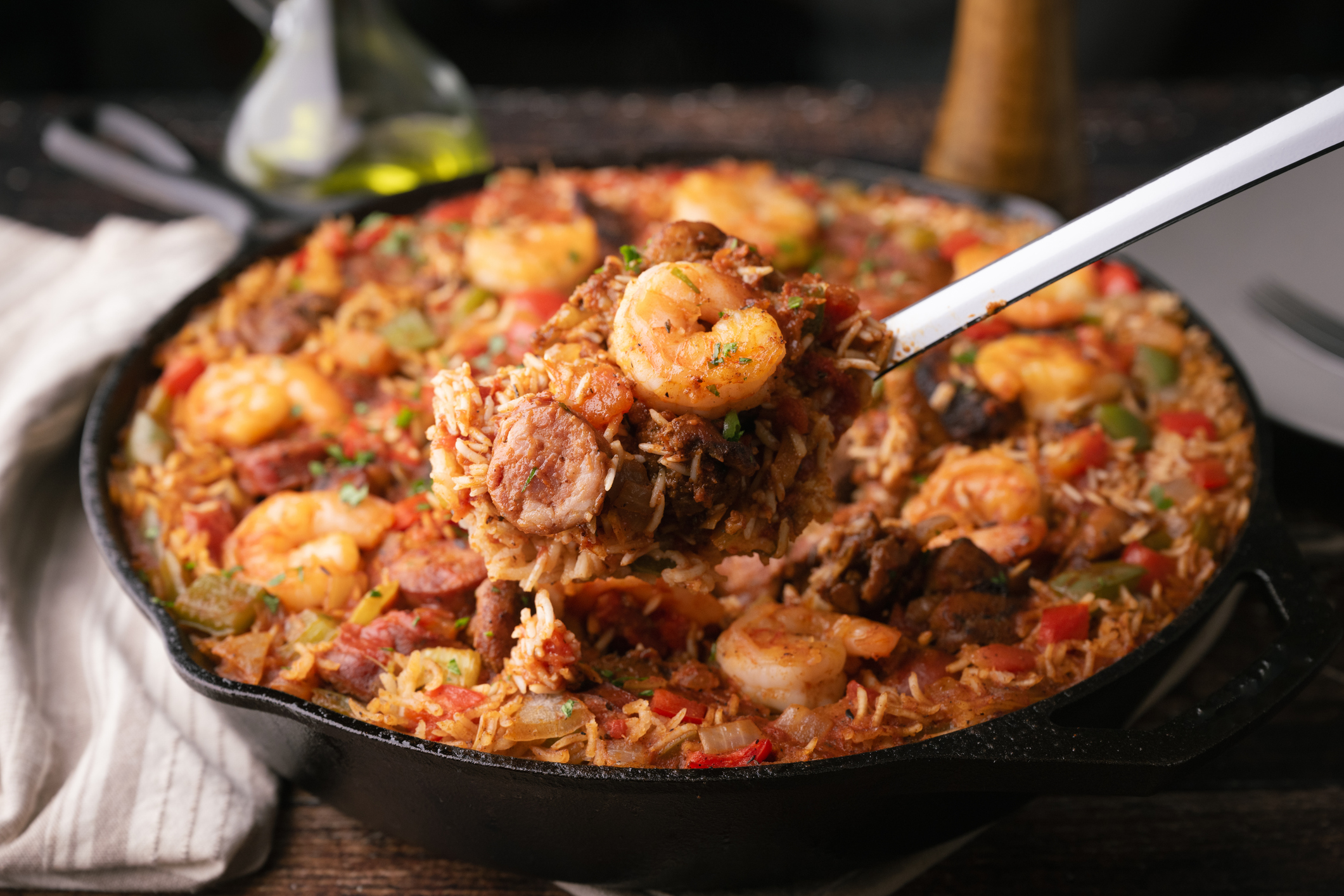
If you have only a few days in the French Quarter, build your eating around the icons. Start with gumbo — the dark roux, the holy trinity of onion, bell pepper, and celery, and either seafood or chicken and andouille sausage. Then chase down a plate of jambalaya, Louisiana’s one-pot answer to paella.
For seafood season, étouffée is non-negotiable. The word means “smothered,” and that’s exactly what happens when crawfish or shrimp simmer in a buttery, seasoned sauce served over rice. Round out the trip with red beans and rice, traditionally a Monday dish, and finish sweet with bananas Foster — the flaming rum-and-brown-sugar dessert born at Brennan’s a few blocks away on Royal Street — or a warm bread pudding.
These aren’t just restaurant orders. They’re exactly the dishes you’ll learn to cook in our classes, so you can recreate the trip long after you’ve flown home.
How can I learn to cook Cajun and Creole food in New Orleans?
The best way to understand this food is to make it. Our school sits inside a renovated molasses warehouse built in the early 1800s at 524 St. Louis Street, in the heart of the French Quarter, and we’ve been teaching visitors since 1980. You can choose the format that fits your trip.
Our hands-on cooking classes put you at the cooktop. In these small, intimate sessions — capped at 10 guests across five cooktops — you cut, season, and prepare a complete Louisiana dinner with one of our expert chefs, then sit down and eat the meal you just made. You’ll leave with recipe cards, an apron, and the confidence to pull it off at home. Classes run three hours and are open to anyone 18 and older, with a 10:00 a.m. morning option and a 6:00 p.m. evening option daily.
Prefer to relax while someone else does the heavy lifting? Our demonstration cooking classes let you sit back, sip a cold drink, and watch our entertaining chefs build a classic Cajun-Creole meal while weaving in the city’s history and folklore. Demos are open to all ages, making them a great fit for families traveling in the summer.
Short on time? Our single-dish lab classes run about 90 minutes and dive deep into one specialty — pralines or gumbo, for example — so you can master a signature recipe between other French Quarter adventures.
Why a cooking class beats another restaurant meal
New Orleans has no shortage of great restaurants, but a class gives you something a meal can’t: the technique and the story behind the plate. You’ll learn why a roux has to cook low and slow, what the holy trinity actually does, and how to season the way Louisiana cooks have for generations. Our chefs are trained in both Creole and Cajun traditions, and they make the lesson as entertaining as it is useful.
There’s a practical upside, too. Summer afternoons in New Orleans get fierce, and an air-conditioned kitchen with a cold local beer and a hands-on project is one of the most comfortable ways to spend a few hours downtown. It’s a rainy-day plan, a date night, a family activity, and a souvenir all rolled into one. When you’re done, you can browse the Louisiana General Store on site for the spices, hot sauces, and cookware you’ll want to bring those flavors back to your own kitchen.
Frequently Asked Questions
Is it too hot to visit New Orleans in the summer?
Not at all — summer is one of the most affordable and lively times to visit, with smaller crowds than the spring festival season. The heat and humidity are real, so plan outdoor activities for the morning or evening and build in indoor breaks. An air-conditioned cooking class is a perfect midday escape from the sun.
What seafood is in season in New Orleans during summer?
Gulf shrimp and blue crab are abundant through the warm months, and crawfish season typically runs through late spring into early summer. That’s why dishes like shrimp Creole, crawfish étouffée, and corn and crab bisque are at their best this time of year.
What’s the difference between Cajun and Creole food?
Broadly, Creole cooking has urban, European, and African influences and often uses tomatoes, while Cajun cooking comes from rural southwest Louisiana and leans rustic and one-pot. In practice the two blend constantly in New Orleans, and our chefs explain the distinctions while you cook.
Are New Orleans cooking classes good for families?
Yes. Our demonstration classes are open to all ages and are a hit with families, while our hands-on classes are designed for guests 18 and older. We also offer kids’ culinary camps during the summer.
Plan Your Summer in the French Quarter
Make this New Orleans trip the one you actually bring home. Reserve a class at the New Orleans School of Cooking, learn to cook the dishes that define the city, and beat the summer heat with a cold drink and a hot skillet.
Phone: (800) 237-4841
Address: 524 St. Louis Street, New Orleans, LA 70130
Website: https://neworleansschoolofcooking.com/
Hours: Hands-on classes daily at 10:00 a.m. and 6:00 p.m. Visit our website or call to confirm current class times and availability.